

Individual Resilience
Resilience can be developed.
Resilience is the ability to navigate and overcome challenges, crises, stress, or trauma. At its core, resilience relies on the skills and resources needed to bounce back from setbacks. Yet, it goes further: it is the capacity to cultivate inner strength and take proactive charge of one’s life. Throughout a lifetime, resilience is not static; it can be newly developed or – often due to significant life events or traumatic experiences – be diminished.
We believe that successful leadership is rooted in self-awareness, self-care, and self-development. We call resilience based on distinct self-awareness and self-direction “mindful resilience.”
Individuelle Resilienz
Resilient kann trainiert werden
Resilienz ist die Fähigkeit, mit Herausforderungen, Krisen, Stress oder Traumata umzugehen und diese zu bewältigen. Entscheidend für die Resilienz sind Fähigkeiten und Ressourcen, um nach Rückschlägen wieder aufzustehen. Aber nicht nur das. Es ist auch die Fähigkeit, „innere Stärke“ zu entwickeln, um belastbar zu sein und sein Leben selbstverantwortlich zu gestalten.

Im Laufe des Lebens kann sich die Resilienz-Kompetenz verändern. Sie kann neu gebildet werden oder – meist durch Schicksalsschläge oder traumatisierende Erlebnisse – abnehmen. Der Resilienz-Begriff kommt sowohl in der Physik und der Natur vor, wird aber häufig der positiven Psychologie zugeordnet. Er wurde von Jack Block in den 1950er Jahren in die Psychologie eingeführt.
Ein wichtiges Grundkonzept der Resilienz stammt von Aaron Antonovsky, einem israelisch-amerikanischen Soziologen. Er gilt als Vater der „Salutogenese“ (salus = gesund, genese = Entstehung). Dieses Konzept besagt, dass Gesundheit kein passiver Gleichgewichtszustand (Homöostase), sondern ein aktives Geschehen (Heterostase) ist. Er beschäftigt sich im Gegensatz zur Pathogenese nicht mit der Frage „Warum wird der Mensch krank“ wird, sondern mit der Fragestellung „Was hält ihn gesund.“
Die Gesundheit wird gefördert durch das Kohärenzgefühl, welches von vier Bedürfnissen geprägt wird:

Ich muss das Problem verstehen.

Die Lösung der Aufgabe muss für mich machbar sein.

Die Aufgabe muss Sinn ergeben.

Sie muss mit meinen Einstellungen und Werten übereinstimmen.
Resilient employees and executives
We rely on our team of experienced coaches and resilience experts, operating in four languages (D/E/F/I). We look forward to supporting you in overcoming your challenges and guiding you toward greater resilience.



Resilience program for young people
Challenges faced by young people.
Facts and figures.

75%
… of mental disorders begin before the age of 25.

41 %
According to vocational trainers, fewer than half of apprenticeships are problem-free. Problems arose in over 26% of cases.

4,5 Std./Tag
The duration of social media use among 13- to 23-year-olds in Switzerland. Three-quarters of respondents underestimated how long they use social media.

37 %
This is the percentage of 17- to 19-year-olds in Switzerland who report experiencing mental health problems.
Why young people today face mental health challenges ?
Mental health issues arise from a complex interplay of factors.
Here are three of the primary causes :
-
Multi-crisis
-
Lack of competence in self-management
-
Overburdened family and lack of solidarity
What can strengthen young people ?
Fostering resilience and robust support systems for enhanced well-being and long-term success.
Key competencies
What are the main skills that help young people to overcome their challenges? Among other things:
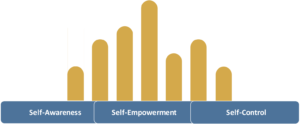
- Self-awareness, self-empowerment & self-control
- Self-acceptance, self-efficacy & self-esteem
- Relationship skills & networking
- Communication skills and conflict management
- Impulse control and emotion regulation
- Ability to concentrate
- Perseverance & goal orientation
- Media competence
- Environment and task-related skills
Strengthening resources & systems
Numerous studies and surveys suggest that young people can be mentally healthier, happier and more resilient if they are part of functional and empowering systems. These systems should be:
- Cultivate empowering relationships, a sense of belonging, and genuine connection
- Establish clear structures and equitable frameworks
- Ensure psychological safety
- Foster self-efficacy and a meaningful sense of purpose
- Encourage experimentation, discovery, and active co-creation while embracing a healthy culture of trial and error
- Integrate creativity and inspiration into the learning process
- Drive individual growth and personal development
Our understanding of resilience
Resilience is trainable and volatile. Failure is part of growth.
1. Self-Leadership
2. Health Literacy
3. Connectedness
4. Purpose & Solution Orientation
5. Acceptance & Adaption
6. Personal Responsibility
7. Realistic Optimism
WHY – our vision
We strengthen the resilience of young people. Our approach is needs-based and sustainable.
-
We develop effective programs that strengthen young people’s resilience together with representatives from business, health promotion, and other partners.
-
We are transforming young people from victims into participants, beginning with a pilot resilience program for students. This lays the groundwork for expanding our services to other young people.
-
In a second step, the impact of the pilot program will unfold throughout Switzerland and will include other relevant systems, particularly those involving legal guardians, vocational trainers, instructors, and mentors.
Development & implementation
The goal is effectiveness. Participation and equality are the paths to achieving it.
A. Raising awareness
- Motivating and informing the target group: topics of resilience, mental health, self-management, and a reflective, positive use of media.
- Involvement of other target groups (legal guardians, vocational trainers, instructors by arrangement)
- …
B. Inclusion of
- Designing effective offerings (online/offline) together with the learners (young people)
- Involvement of secondary school students, apprentices, and graduates or drop-outs of apprenticeship programs.
- Program development: 3-4 year focus (incl. integration of existing effective offerings).
- ….
C. Activate
Impact through:
- Motto: Being allowed to try things out instead of having to be expert; shaping instead of tolerating
- Promotion: self-awareness, self-acceptance, self-management – resilience
- Social incentives: “strengthening” others through one’s own behavior; e.g., “jogging” triggers a donation to “Velafrica”
- Synergy effects: Use of existing resources (e.g., Atelier du Futur – Mobiliar, etc.), multipliers (e.g., KV Zurich), media (e.g., Tages-Anzeiger), etc.
- Creativity & self-efficacy: learners as podcasters, artists, and consultants
- Mentoring: young people as mentee and mentor (role reversal)
- Campaigning: communication in (social) media
D. Multiplication
- Concept for expanding the target group from the pilot project to other relevant groups (grammar school pupils; vocational school students across Switzerland; young people from precarious backgrounds, etc.)
- Increased integration of relevant target groups (with a focus on parents/guardians, elementary schools, etc.)
- …
Resilience projects that specifically strengthen
We invest 1% of our turnover. Together we are twice as strong.
Promoting resilience projects is important to us. Are you in?
1% of our turnover flows into long-term resilience projects in Switzerland and abroad. We would be delighted if you joined in and invested one percent of the order volume with us. Because together, we are twice as strong.
Choose your favorite project, or suggest a project of your own that could benefit from our collaboration.
Our core projects can be found here: Donate
Customers


